
A photo shows a moment.
Video shows what's happening.
Our cameras record HD video as well as high-resolution still images, so you see movement, flow and change, not just a single frozen frame.
The Limits of a Single Image
A still image captures one instant. It can show that water is present, but not whether it is flowing, standing or rising. It can show something on the track or road, but not whether it is passing through or has come to rest.
A still can also mislead. A raindrop on the lens, a passing vehicle or a moving shadow can look like a problem when there isn't one. When all you have is a still, you either send someone to check or wait for the next picture.
Video removes the guesswork. A short clip shows how things are moving and changing, so you can make the right call from your desk.
What Video Shows That a Still Can't
A few seconds of video answer the questions a photograph leaves open:
Flowing or Standing: see whether water is moving, which way it is going and how fast, instead of guessing from a still surface.
Passing or Stuck: tell debris washing through from a blockage starting to form at a grille, culvert or catchpit.
Erosion and Washout: see soil, stones and leaves being carried away, an early sign that a bank or cess is being undermined.
Real Problem or False Alarm: rain on the lens, spray, a passing train or moving shadows are obvious on video but can look like a fault in a single frame.
A Real Example: Same Place, Same Moment
This still image and video clip were captured at the same time by one of our cameras on a Network Rail site. Water from land outside the railway boundary is pouring down the bank and flooding onto Network Rail infrastructure.
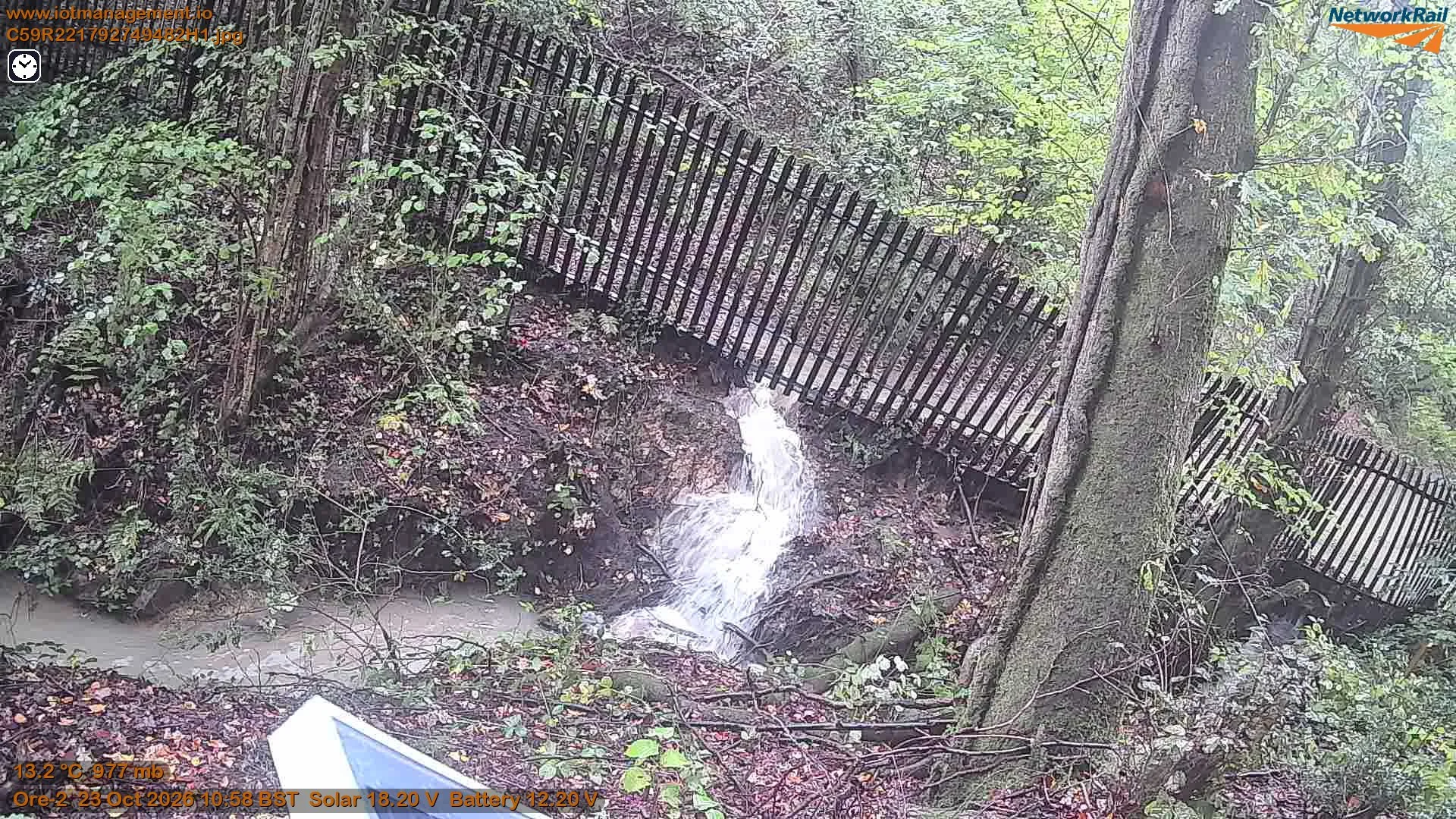
The still shows that water is there. It can't show how much is coming through, how fast it is moving, or how serious the situation is.
The video shows the force and volume of the water coming off the neighbouring land. It's the difference between seeing a wet bank and understanding the scale of the problem. It also gives the asset owner clear evidence of where the water is coming from.
Day and Night
Problems don't wait for daylight. Heavy rain carries on after dark, when nobody is on site and a still image is at its hardest to read.
Our cameras have built-in infrared illuminators and a switching IR-cut filter. By day, the filter keeps colours true in both images and video. After dark, the filter moves aside, the infrared lights come on, and the camera keeps recording stills and video clips through the night. There are no separate floodlights and no mains power to install.
At night, video matters even more. In a still infrared image, wet ground, standing water and running water can be hard to tell apart. In a clip, moving water catches the light and you can see it flowing.
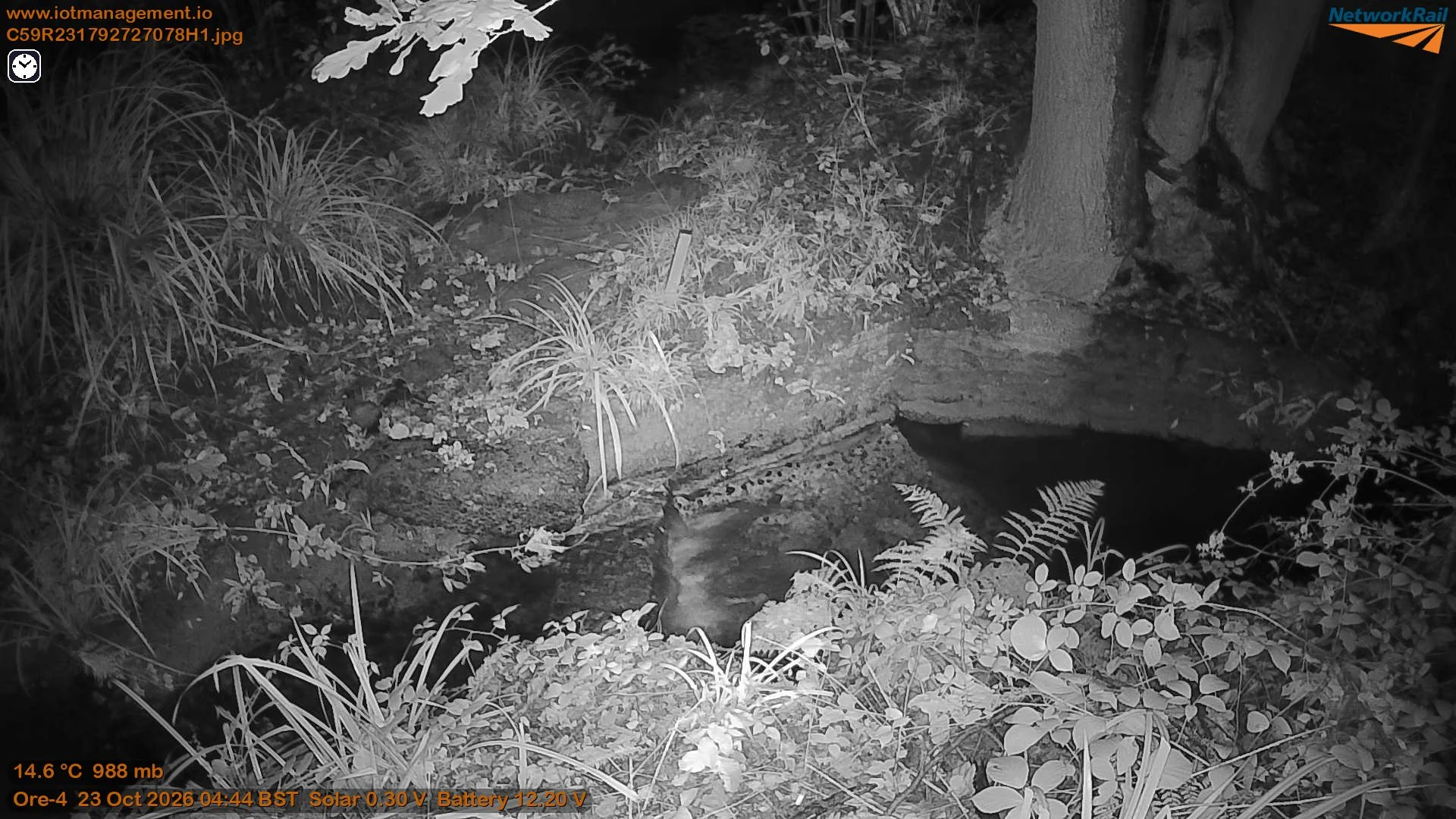
In the still, the water in the centre of the picture is a soft grey patch. It could be wet ground or a puddle. In the video, its surface moves for the full 20 seconds, and it's clear the water is flowing.
Better Decisions, Fewer Wasted Visits
Every site visit costs time and money, and some sites take careful planning just to reach safely. When the picture is unclear, the cautious choice is to send someone out, often to find nothing wrong.
Video gives the people watching the context to make that call from their desk. Before anyone sets off, they can see whether a problem is real, how serious it is, and what the team will need when they get there.
Every clip is stored, and you can scroll back through it and download it. That gives you a clear record for reports, incident reviews and conversations with neighbouring landowners.
How It Works
Our cameras capture still images and video automatically, day and night:
Full HD Stills: a 1080p image every five minutes.
HD Video: a 20-second 720p clip every fifteen minutes.
Scroll Back in Time: every image and clip is stored, and you can look back through them and download them from the app.
Our Own AI: our in-house AI checks what the camera sees and flags problems such as blockages, flooding and obstructions.
Each camera runs on its own solar panel and battery and sends everything over 4G, so it needs no mains power, no cabling and no connection to existing infrastructure.
See It for Yourself
See our cameras at work on real sites, or get in touch to talk about what video could show you at yours.